
When families in Dallas–Fort Worth start looking for senior care, they usually find two kinds of assisted living: large assisted living communities and small residential care homes. Both can provide help with daily activities, but they feel very different. Here’s how to think about the choice.
What is a residential care home?
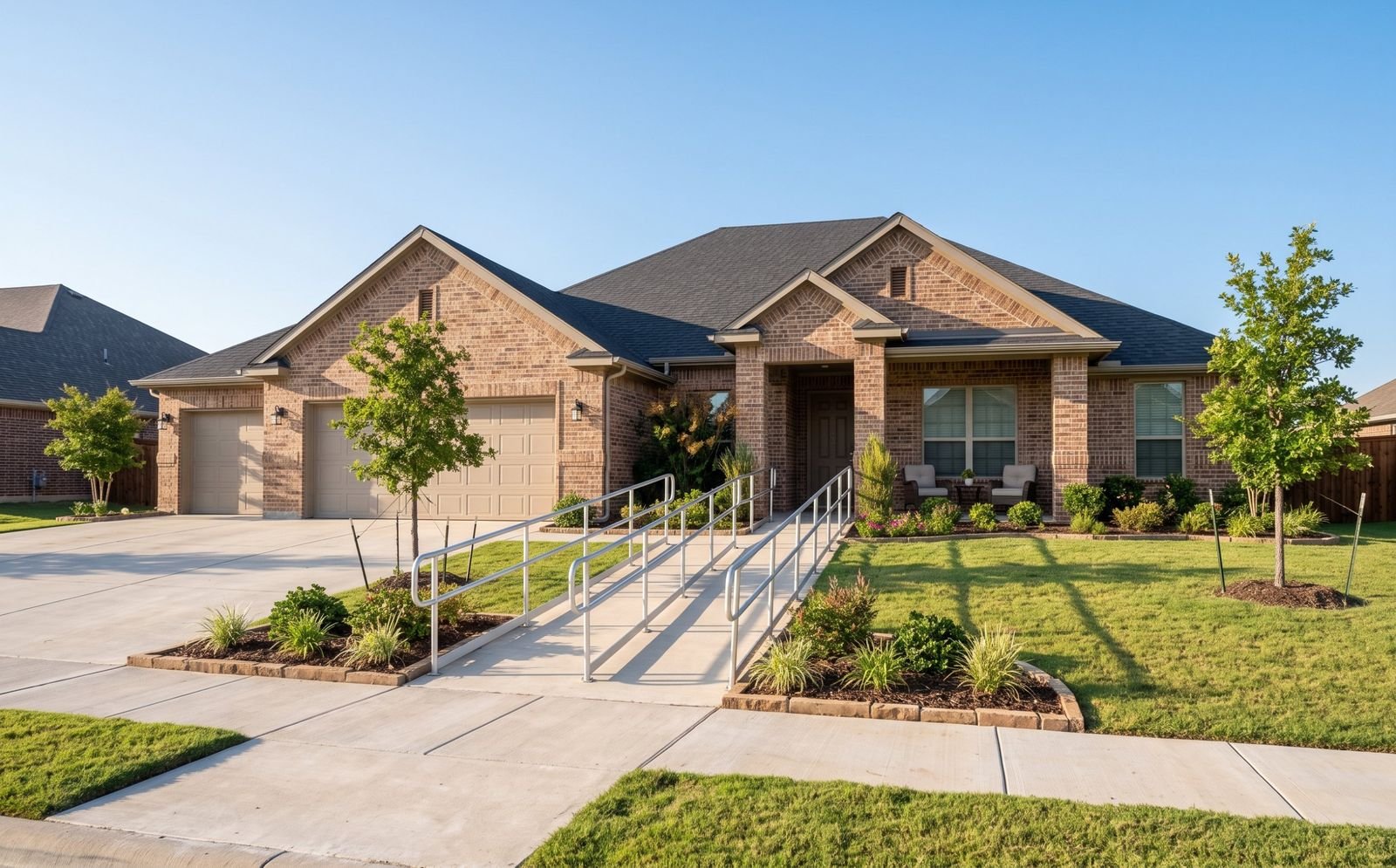
A residential care home is a small assisted living setting, usually a single house in a residential neighborhood. A limited number of residents live together, share common spaces like the living room and dining table, and receive help from caregivers who work in the home.
What is a large assisted living community?
Large assisted living communities are purpose-built buildings with many apartments, a dining room, activity spaces and a larger staff. They often offer more on-site amenities and scheduled activities.
Key differences to consider
- Setting — a home-like, family-style atmosphere versus a larger building with more amenities.
- Attention — smaller homes may offer more one-on-one time with caregivers because there are fewer residents.
- Social life — large communities may have more organized activities; small homes tend to feel quieter and more personal.
- Services — services vary by home and community, including memory care and medication assistance. Always ask.
- Licensing — in Texas, both are typically licensed as assisted living facilities (Type A or Type B).
Which is right for your loved one?
The right choice depends on your loved one’s care needs, personality, preferences, location and budget. Some older adults thrive in a busy community; others are more comfortable in a quiet home. Touring both types is the best way to decide — and our guide to questions to ask on a tour can help.
Get personalized placement help
Families who want help exploring residential care homes in North Texas can connect with Quality Care Referral Network LLC, an independent referral partner of Care Home Association. Learn how placement assistance works.